I'll be honest with you: my first attempt at turning my podcast into YouTube Shorts was a complete disaster. I spent an entire Sunday manually scrubbing through a 90-minute episode, exported three clips I was proud of, posted them full of hope, and got a combined 47 views. Forty-seven. My mother accounted for at least six of those.
That was before I figured out the workflow I'm about to share with you. These days, a single podcast episode turns into 8 to 12 Shorts in under an hour of actual work, and those little clips quietly bring in more new listeners than anything else I do. No film degree, no editing timeline marathons.
Here is the exact process, including the tools, the mistakes I made along the way, and the small details that actually move the needle.
Why podcasts are basically Shorts goldmines
Think about it for a second: you already did the hard part. You sat down and recorded an hour of real human conversation. Stories, opinions, funny moments, the occasional hot take your co-host immediately regretted saying out loud. A YouTube Short only needs 30 to 60 seconds of that. You are not creating new content here. You are mining content you already made.
Most podcasters are sitting on hundreds of clip-worthy moments and never touch them, for one reason: the editing feels overwhelming. Scrubbing timelines, reframing shots, adding captions by hand... who has time for that between recording, editing the full episode, and having an actual life? That is the entire game here. Remove the overwhelm, and the clips start flowing.
Step 1: Find the moments (15 minutes, not 3 hours)
Do not watch the whole episode again. You lived it. You know where the energy was.
My system is embarrassingly simple: I keep a running note on my phone while we record. Just timestamps and two-word descriptions. "32:10, coffee rant." "58:44, guest mic drop." That's the whole system. When clip day comes, I only rewatch those two-to-three-minute windows instead of the full episode.
No notes? No problem. Skim the transcript instead of the audio. Most recording tools generate one automatically now. You're hunting for four things: a strong opinion stated simply, a story with a beginning and an end, something genuinely funny, or one practical tip someone can use today.
And here is the rule that matters most: pick moments that work with zero context. A clip that needs three minutes of backstory to make sense will die in the feed. The best Shorts are self-contained little stories. If a stranger who has never heard of your show can enjoy it cold, you've got a winner.
Step 2: Let AI do the rough cut
This is where AI clip makers earn their keep. You upload the episode, or just the timestamped sections, and the tool scans for high-energy moments, detects who is speaking, and hands you vertical-ready drafts with captions already on them.
My honest take after doing this for months: the AI's first draft is right about 70% of the time. It finds genuinely good moments, better than I expected at first, honestly. But it sometimes starts a clip two seconds too late, or ends on an awkward breath, or picks a moment that felt electric in the room but falls flat out of context. So I treat every AI output as a rough cut, never a finished product. One review pass per clip, trim the edges, done. Ten minutes tops.
What AI is genuinely great at: finding moments I completely forgot about, keeping the active speaker framed (it never gets lazy), and generating captions. What it still needs you for: taste. You know your audience. If a clip feels off, cut it. Never post filler just because the AI made it easy.
Step 3: The first 3 seconds decide everything
Uncomfortable truth: nobody taps your Short because of your podcast. They stop mid-scroll because the first three seconds grabbed them by the collar.
So open every clip with the punchline, not the setup. If the funny moment is "...and that's when the client fired us on Zoom," then START there, and flash back to the story after. This feels completely wrong the first time you do it. Do it anyway.
Three things that consistently work for me. First, bold captions, big and centered. The large majority of Shorts get watched muted at first, so if there is no text on screen, you have already lost. Second, one idea per clip. If your sixty seconds contains two stories, congratulations, that's two Shorts. Third, end with a tiny open loop when it fits naturally: "...but the worst part came later." Curiosity is free retention.
And please, cut the "hey guys, welcome back to the podcast" intro. Nobody on Shorts knows your show yet. Earn the follow first. Introductions can wait.
Step 4: Reframe for vertical properly
A 16:9 podcast frame squished into 9:16 looks awful. You know it, I know it, your viewers definitely know it.
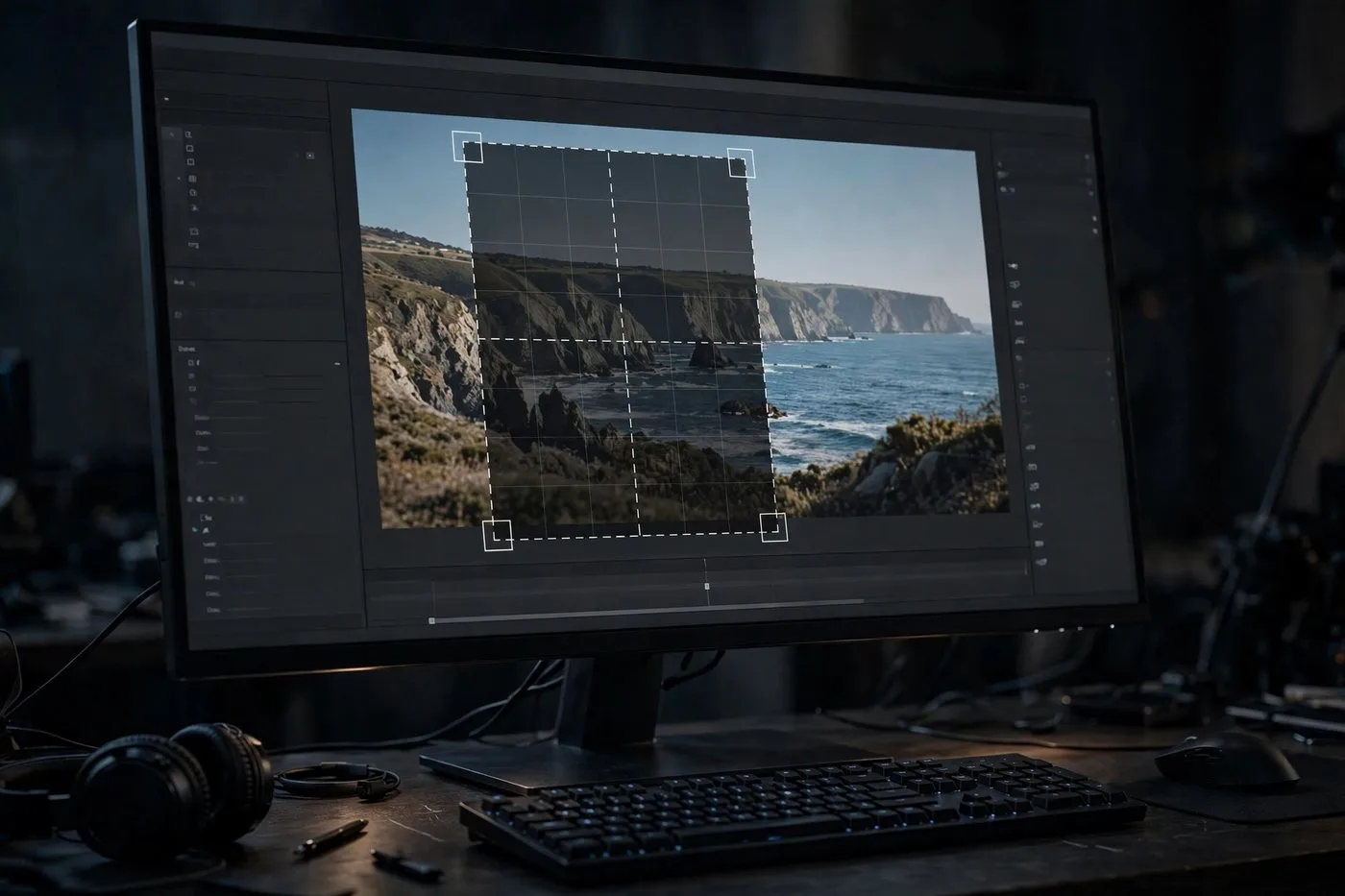
The fix is reframing, not squishing. Crop to whoever is talking and keep their eyes in the upper third of the frame. When the speaker switches, the frame should switch with them. AI tools handle this with speaker detection now, and I'll admit something: the automation is genuinely better at this than my manual attempts were. It never gets tired and leaves a wide shot running for twenty seconds.
Doing it by hand? Export at 1080x1920, keep the face large, and put captions in the lower-middle of the frame, not the very bottom. The Shorts interface covers the bottom edge with its own buttons, and I learned that one the embarrassing way.
The mistakes I made (so you don't have to)
Posting fifteen clips in one day because I was excited. The algorithm does not reward dumps. It rewards consistency. Spread them out.
Using the episode title as the Short's title. "Ep. 47, Q&A" means nothing to a stranger. Write titles like hooks: "The client fired us on Zoom."
Skipping captions because my audio was clear. Muted viewers scrolled past every single one of those clips. Every one.
Clipping the "best" sixty seconds instead of the most self-contained sixty seconds. Those are different things, and it took me a month to learn the difference.
How many Shorts should you actually post?
Start with three to five per week from each episode. That pace is sustainable, and it gives the algorithm steady signals without burying anyone's subscription feed.
And let me be real about something: some clips will flop, and you cannot predict which ones. My best-performing Short ever, the one that crossed 400,000 views, was a throwaway moment I almost didn't post. Volume plus taste beats perfection. Keep the pipeline moving.
The full workflow, start to finish
Here is my actual routine now for one 90-minute episode. One: timestamps from my phone notes, which I already have from recording day. Two: upload to the AI clipper and let it find and draft ten to twelve clips, about ten minutes of my time. Three: review pass, trim the edges, kill the weak ones, keep eight, about fifteen minutes. Four: fix hooks and captions on the keepers, about twenty minutes. Five: schedule three to five per week.
Total hands-on time: under an hour. Output: two weeks of Shorts. The math finally works, and my podcast has a discovery engine running while I sleep.